Garage Epoxy Coatings
in Zachary
A complete garage floor system for the northern end of East Baton Rouge Parish: the slab ground open, damage repaired, a 100 percent solids base laid down, flake or a single color broadcast into it, and a polyaspartic wear coat over the top. Same crew from the walk to the last pass.
What the Full Garage System Actually Includes
A garage floor built to last is five distinct layers of work, and skipping any of them shows up inside a year. It opens with diamond grinding, which takes the sealed, troweled skin off the concrete and leaves an open profile the resin can bite into. Spalled corners, pop-outs, and the trench where a water heater once sat get rebuilt with patching mortar and rigid filler. Then a 100 percent solids base coat goes down, meaning nothing in the bucket evaporates on the way to a cured film, so the thickness you specify is the thickness you get.
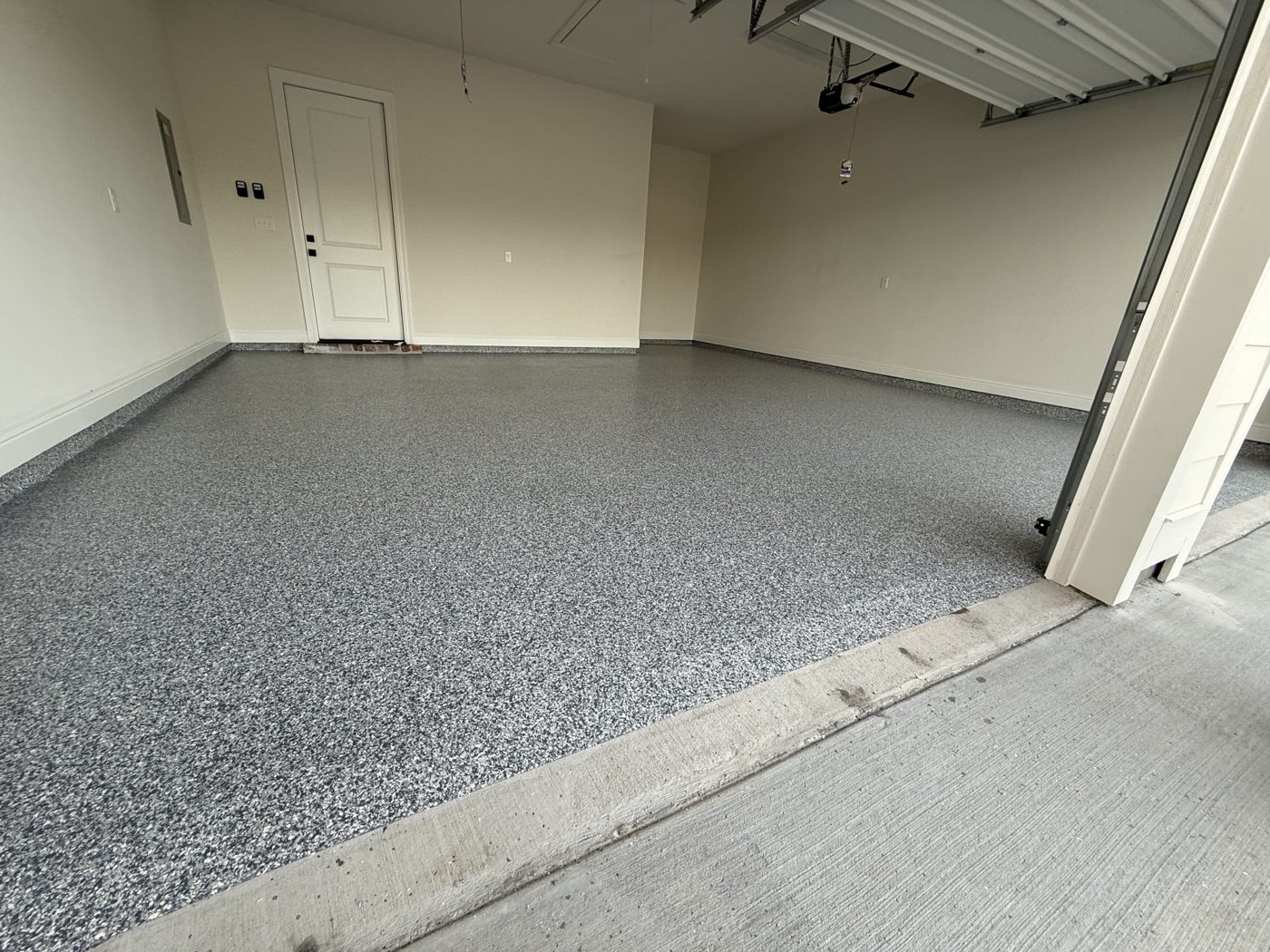
The decorative layer is where owners make their one real aesthetic decision. Vinyl flake gets broadcast into the wet base until the surface will not take any more, then the excess is scraped back and the floor is sealed. A solid color skips the chip and reads cleaner and brighter, which suits owners who want the garage to feel like finished square footage. Either way the last pass is a polyaspartic top coat, which cures hard, keeps its color under the light coming through an open overhead door, and takes the abuse that a wear layer exists to take. Browse finished floors in our project gallery.
Newer Zachary Slabs and the Moisture Reading
Zachary is the northernmost city in East Baton Rouge Parish, and a decade of family growth behind the school district means much of the housing here is new construction or close to it. That is an advantage on paper: square garages, clean pours, no fifty years of oil soaked into the surface. It also means a lot of the slabs we walk are young, and young concrete is still giving up water it was mixed with. Resin cures into a film that does not breathe. Trap rising moisture under it and the pressure lifts the coating off the concrete in blisters, no matter how good the resin was.
So we test rather than guess. Concrete wants at least 28 days before it is worth coating, and we confirm with a moisture reading instead of counting days on a calendar. If the number comes back high, the honest answer is to wait a few weeks or specify a moisture-tolerant primer that is built to hold under pressure, and we say which one on the walk. Builders pour on a fast schedule and closing dates do not move, so on new-construction garages we coordinate the coating week against the construction calendar rather than squeezing it in wherever it fits. A floor that waits two weeks lasts. One rushed onto a green slab gets redone.
Planning Two or Three Days Around a Full Garage
Most Zachary garages are not empty rooms. They hold two vehicles, a row of bikes and scooters, the deep freezer, the lawn equipment, and whatever the school year has generated in sports gear. All of it has to come out, because we grind wall to wall and there is nowhere to shuffle things to. The practical version: clear it into the driveway and the yard the evening before, or into a rented pod if the forecast looks unfriendly. The freezer is the one item worth a plan of its own, since it needs to stay plugged in somewhere for the duration.
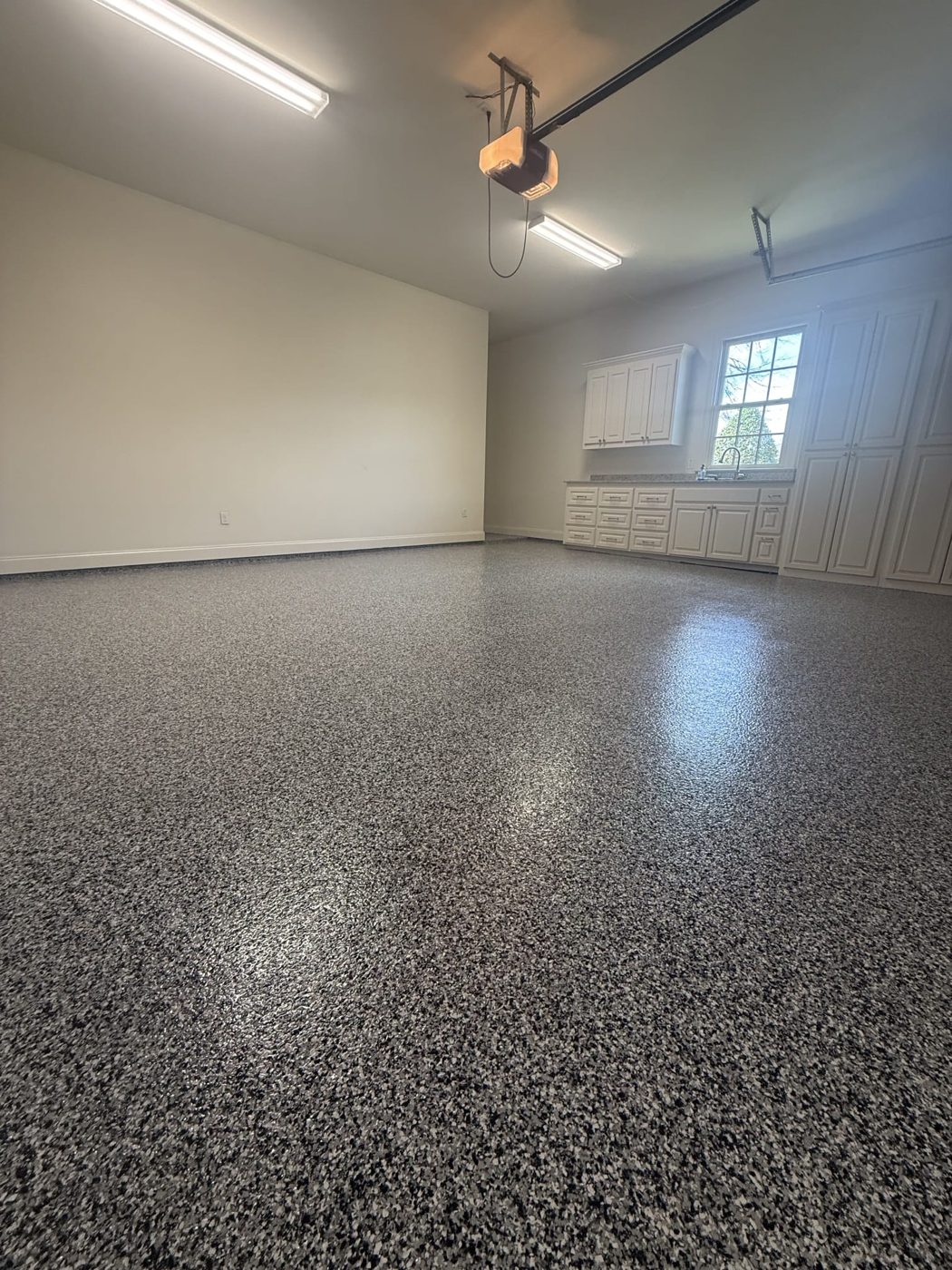
Day one is prep: grinding, dust extraction, crack and spall repair, and the moisture check confirmed before anything is mixed. Day two is the base coat and the flake or color broadcast. Day three is the scrape-down and the polyaspartic wear coat.
Foot traffic returns the morning after the top coat. Vehicles wait a full 48 hours, because the coating is still building its final hardness and a car parked on it early will leave the imprint permanently. Load the shelving back first, park last.
Connor sets the exact days at the walk, not after the deposit clears.
We build that schedule around your household rather than the other way around. Families here tend to want the crew gone before a weekend or slotted into a school break, and that is usually workable if the call comes with a little lead time. Reach us through our contact page with the week you have in mind.
Hot Tires, Louisiana Summer, and Why the Top Coat Matters
The failure mode that ends most garage floors around here has a name: hot tire pickup. A car driven any distance in a Louisiana July comes home with tires near 140 degrees, and a soft or thin coating goes tacky under that heat. The rubber grabs it, and when the vehicle rolls out the next morning the coating peels off in patches shaped exactly like the tire contact patch.
Two things prevent it. The first is bond: a properly ground profile means the resin is mechanically locked into the concrete rather than sitting on top of a sealed surface, so there is nothing for a tire to lift. The second is the polyaspartic wear coat, which cures to a hardness that stays hard when a hot tire sits on it and holds its color instead of going amber where the afternoon sun reaches through the door. That is why we run polyaspartic over an epoxy base as the default here rather than as an upgrade. A flake floor also earns its keep in this climate: the texture gives grip on a slab that gets wet from summer rain running off the vehicles, and it disguises the dirt a working garage collects.
What Connor Decides on the Site Walk
Connor or a senior installer walks every Zachary garage before a number is written, and there are specific things being read on that visit. The moisture condition of the slab comes first, because it determines the primer and sometimes the schedule. Then the surface itself: how hard the concrete is, how it was finished, whether the previous owner sealed it, and how aggressive the grind needs to be. Cracks get sorted into two piles. Dormant shrinkage cracks are chased out and filled as ordinary prep. A crack that is still moving is a different conversation, and you get told that on the walk rather than after a floor is sitting on top of it.
The walk also settles the finish. Flake blends and solid colors read differently under a given garage’s light, so samples come out on your own slab instead of a screen. Slope toward the door, the height of the transition at the threshold, and where the cove needs to run up the wall all get measured. What you get back is a written scope with the tested condition, the specified system, and the install days named. That is the number, and it holds. Call (225) 456-9224 or send the details through our contact page.
Other Floors We Install Around Zachary
A garage is usually the first project and rarely the last one. If a chip finish is what you are after, the flake epoxy work we do in Zachary covers the blend options in detail, while the polyaspartic system is the one to read if a one-day turnaround matters more than a decorative layer. Shops, barns, and outbuildings on the larger lots north of town fall under industrial coatings, and patios, carports, and porches get the UV-stable treatment described on our outdoor coatings page. The Zachary garage coatings scope you are reading now is the one most families start with. Full system specifications live on our main garage coatings page.
Garage Coatings in Zachary FAQ
How soon can I park on a new garage floor?
Walk on it the morning after the wear coat goes down. Keep vehicles off for a full 48 hours while the polyaspartic reaches its final hardness. Parking early presses a permanent tire outline into a floor that would otherwise have been fine, which is a frustrating way to lose a new install.
Our house is only a few years old. Does the slab still need testing?
Especially then. Younger concrete is still releasing water, and a resin film seals that moisture underneath where the pressure lifts it into blisters. We take a reading on every slab regardless of age and match the primer to the number, or push the week if the reading says to wait.
Will hot tires damage the coating in summer?
Not on a properly bonded floor. Tire pickup happens when a thin or poorly bonded film goes soft under heat and the rubber lifts it. A ground profile plus a polyaspartic wear coat gives the tire nothing to grab, which is why that combination is our default rather than an upgrade.
Do we have to empty the whole garage?
Yes. We grind the full slab wall to wall, so vehicles, shelving, bikes, and the freezer all need to be out before day one. Most families stage everything in the driveway overnight and run the freezer on an extension cord somewhere shaded until the crew is finished.
Flake or a solid color for a family garage?
Flake, in most cases. The texture gives traction when water comes off the vehicles, and the pattern hides the dirt a garage that gets used will collect. A solid color reads brighter and more finished, which suits owners treating the space as an extension of the house.
What happens if the slab has cracks?
Dormant shrinkage cracks are chased open and filled with rigid material during prep, then disappear under the system. A crack that is still moving points at something below the slab, and we document it on the walk and tell you what it means before anyone talks about coating over it.
Garage Coatings in Zachary
Signature installs garage floors throughout Zachary and the rest of East Baton Rouge Parish, from new-construction subdivisions on the north end to the older streets near the original town. Every slab gets tested, ground, and repaired before resin touches it, and the crew that walks your garage is the crew that pours it. Ask for the install week that suits your family and we will build the schedule around it.
Call (225) 456-9224 Free Price