Full-Broadcast Flake Floors
for Lafayette Homes
Chip floors thrown to refusal, scraped, and sealed under clear polyaspartic. Built for garages that see red dirt, patios that catch afternoon rain, and utility rooms that take a hose.
Why Chip Floors Make Sense Around Here
Flake is a chip system. An epoxy base coat goes down, colored vinyl chips get thrown into it while it is still wet, the loose material gets scraped off after cure, and a clear polyaspartic locks the whole thing in. What you end up with is a speckled surface with a little tooth to it instead of a flat sheet of gloss. That matters in Lafayette more than most people expect, because a solid-color floor here is a magnet for everything the yard sends inside.
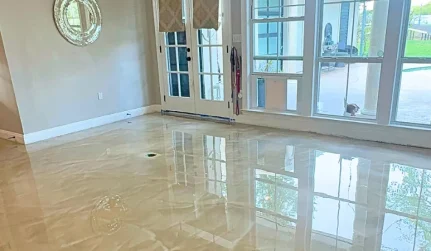
Anybody who has parked on a gravel drive or pulled a boat out of the coulee knows the red dirt situation. It rides in on tires, on boot soles, on the dog. On a plain gray floor you see every track by Wednesday. A mid-tone chip blend takes that same dirt and swallows it visually until you get around to sweeping. Nobody is asking a garage floor to stay spotless. They are asking it to not look filthy between cleanings, and that is exactly what the chip pattern buys you.
Where We Put Flake in Lafayette
- Garages. The bread and butter. Hides tire tracking and drips, gives you footing when the floor is wet, and turns a raw slab into something you do not mind leaving the door open on.
- Covered patios and carports. Chip texture plus a UV-stable topcoat handles sun and blowing rain better than a slick finish. We spec these differently than an interior floor.
- Utility and laundry rooms. Seamless, so there is no grout line for detergent and mop water to work into. Takes a hose if the room drains.
- Rental properties near campus. Landlords put flake down because it survives tenants and turns over with a broom instead of a carpet crew.
Broadcast to Refusal, Not to a Budget
Here is where most flake jobs get cut and where you should ask questions. Full broadcast means we keep throwing chip into the wet base coat until the surface will not take another flake. The base is completely buried. Nothing shows through. Partial broadcast means the installer throws a lighter pass and lets the base color show between chips, which uses maybe half the material and looks perfectly fine on the day the job is done.
The problem shows up in year two: on a partial broadcast, wear happens at the exposed base coat between the chips, so traffic paths start reading lighter than the rest. On a full broadcast the wear surface is the topcoat over solid chip, and it dulls evenly instead of going patchy. We quote full broadcast for garages because that is the honest system for a floor somebody is going to drive on. If a partial is what a space actually calls for, and sometimes it is, we say so and price it that way.
After the broadcast cures, we scrape the floor down. That step is not optional and it is not fast. Loose chip standing on edge has to come off with a blade so the surface is flat enough for the clear coats to level. Skip the scrape and the floor comes out gritty like sandpaper, which people mistake for texture until they try to mop it. Then two coats of clear polyaspartic go on. See finished chip work in our gallery, read the full system on our flake epoxy page, or call (225) 456-9224.
Picking a Blend That Lives With Acadiana
We bring real chip samples on cured board to the walkthrough, not a printed card. Color reads completely differently under a garage bulb than it does in a showroom, and if the door faces west you are going to get an hour of orange light on that floor every evening. Look at it in the room it is going in. If you want Cajuns colors worked into a blend, we can do that, but we will usually steer you toward carrying it as a border or an accent rather than the whole field.
There is a practical side to the color too. Chip adds real thickness, roughly twice what a plain roll-on coating gives you, and that thickness is what takes the abuse from a jack stand or a dropped socket. It also resists hot-tire pickup. Park a truck on a cheap coating after a July drive down Ambassador Caffery and the tire will lift the film right off the slab. A properly broadcast chip floor under polyaspartic does not do that.
Boiled Crawfish, Storm Water, and Real Use
Ask anybody in Lafayette what their garage floor actually goes through and you will hear about a boil before you hear about a car. Seasoning water is salty, greasy, and it stains raw concrete permanently. On a sealed chip floor it sits on top. Hose it off, push it out the door, done. Same story with the ice chest that leaks all afternoon and the fish table nobody thought to put a tarp under.
Traction matters the afternoon a storm pushes water twelve feet into an open garage and a plain-gloss floor turns into a hazard. The chip surface has enough profile to grip, and where somebody wants more, a patio or a ramp, we bump the aggregate in the topcoat. Traction and cleanability pull against each other, so we set that balance based on the room, not on a default. Our anti-slip coatings page covers the aggressive end of that range.
For landlords with houses near campus, flake pencils out differently than it does for a homeowner. A student rental garage or utility room takes four years of abuse in one lease cycle. Carpet and vinyl get replaced. A chip floor gets swept. We have put these down at rental properties where the whole point was to stop paying for flooring every turnover, and the math works because the floor outlives the tenants by a decade. If you own several properties, tell us that at the walkthrough and we will schedule them together.
What Prep Actually Looks Like
Roughly eighty percent of coating failures we get called out to inspect trace back to prep, not product. So the boring part is the important part. We grind the slab with a planetary machine and diamond segments matched to the hardness of your concrete, pulling dust through a HEPA shroud as we go. That opens the pores so the primer has somewhere to go. Acid etching alone does not get there, and we will not warranty a floor built on it.
Prairie clay under Lafayette swells and shrinks with the wet and dry cycle, which means slabs here crack from soil movement more than coastal slabs do. We chase every crack, fill with rigid epoxy, and grind it flush. If the crack pattern says the slab is still moving, we tell you before we coat it rather than after. Moisture testing is standard on every quote, because even inland slabs in this parish read damper than owners expect and the wrong primer over a wet slab will let go inside a year.
Then the sequence runs: primer, pigmented base, broadcast to refusal, cure, scrape, vacuum, two clear coats. Most residential garages are a two to three day job. Polyaspartic clear is walk-on the same evening and ready for vehicles about a day later, which is why we lean on it here instead of straight epoxy in high humidity. Connor or a senior installer walks the space before you get a number, and the number does not move between the handshake and the handoff. Reach us through the contact page or call (225) 456-9224.
Other work we do in the Hub City: garage coatings, metallic epoxy, polished concrete, industrial coatings, and restaurant flooring. We run chip floors elsewhere in the region too, including Houma and New Orleans, and you can see the full territory on our service areas page.
Flake Epoxy in Lafayette FAQ
What is the difference between full and partial broadcast?
Full broadcast means chip is thrown until the base will not accept any more, so the base coat is completely buried. Partial means a lighter pass with base color showing through. Both look good on day one. The difference shows in year two, when a partial wears at the exposed base and goes patchy in traffic paths while a full broadcast dulls evenly. We quote full broadcast for garages.
Can I hose down a flake floor after a crawfish boil?
Yes, and that is a normal Saturday for these floors. Seasoning water, grease, and boil spill sit on top of the polyaspartic instead of soaking into concrete. Rinse it, push it out the door, and the floor is done. Raw slab stains permanently from the same spill. Same goes for a leaking ice chest or a fish table without a tarp under it.
Is a chip floor slippery when water blows into the garage?
Less than a plain gloss floor, which is one of the practical reasons we push it here. The chip layer leaves a real profile underfoot, so a floor wet from an afternoon storm still gives you footing. On patios, ramps, or anywhere somebody wants more bite, we add aggregate to the topcoat and dial the traction up. That trades off against how easily it mops, so we set the balance for the space.
Do these floors hold up in a student rental?
They are one of the better answers for it. A chip floor in a rental garage or utility room takes a full lease cycle of abuse and turns over with a broom instead of a flooring crew. Landlords who own several places near campus put it down to stop replacing surfaces every year. Tell us at the walkthrough if you own multiple properties and we will schedule them as one run.
How long does the install take and when can I park on it?
Most residential garages run two to three days: prep and prime, base and broadcast, then scrape and two clear coats. With a polyaspartic topcoat you are walking on it the same evening and driving on it about a day after the final coat. Straight epoxy takes longer to get there, which is part of why we favor polyaspartic clear in Lafayette humidity.
Chip Floors for Lafayette Garages
Broadcast to refusal, scraped, and sealed. Walked and priced by the person who installs it.
Call the Installer Free Price