Lafayette’s Concrete,
Ground and Polished
Cream, salt-and-pepper, and aggregate-exposed finishes for downtown storefronts, Oil Center offices, and Jefferson Street kitchens. The slab you already own, made permanent.
Why Lafayette Keeps Picking Polish
Walk downtown or through the Oil Center and you will see the same floor over and over: a soft gray sheen under the racks in a clothing shop, a satin surface in a renovated office suite, a floor with the stone showing through in a brewery taproom. Polished concrete became the default look here because it fits how these buildings get reused. Somebody takes a 1960s office or an old retail bay, pulls up carpet and glue-down tile, and finds a slab underneath that is already the right material. Instead of hauling in a new floor, we refine the one that is already there.

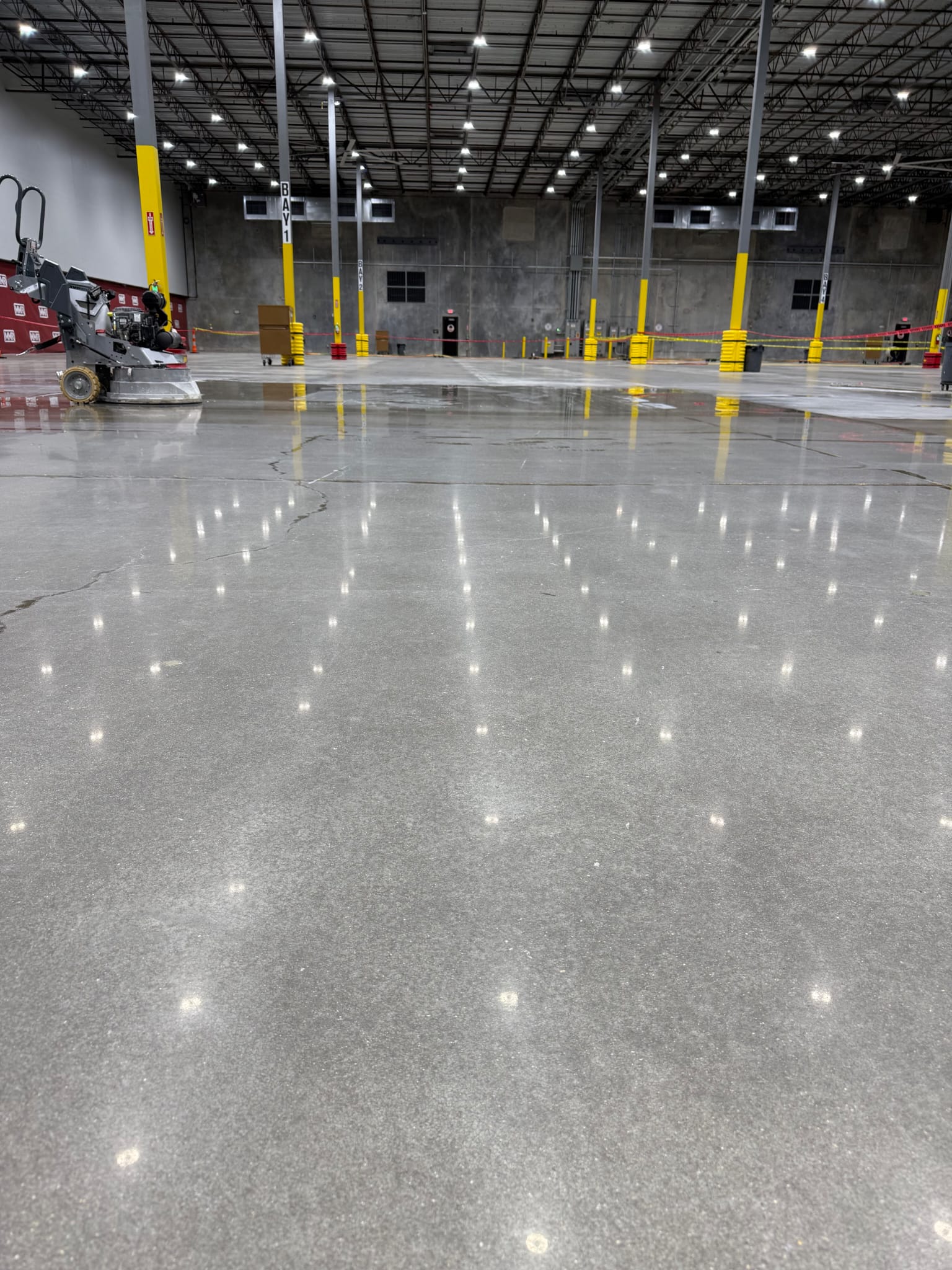
The Jefferson Street crowd, the coffee shops, the taprooms, the little restaurants that stay busy from lunch until late, put a floor through more in a year than a house does in ten. Chairs drag, coolers sweat, mop water goes down every night, and a delivery hand truck rolls the same line through the door a hundred times a week. A polished slab handles that because there is no film sitting on top to wear through. The wear surface is concrete. Signature Epoxy Flooring runs the same tooling and the same sequence on a small Lafayette storefront that we ran across 135,000 square feet for MMR, and that is the whole reason our small floors come out flat and even.
Grind and Seal or True Mechanical Polish
These two get sold as the same thing and they are not, so here is the honest version. A true mechanical polish means we cut the slab with progressively finer diamonds, harden it with a densifier partway through, and keep refining until the concrete itself is reflective. The shine is the stone and paste, burnished. Nothing is sitting on the surface, so nothing can peel.
A grind and seal means we grind the slab flat and clean, then roll or spray a sealer over it for the gloss. It costs less and goes down faster, and for a warehouse back room or a shop where nobody is looking at the floor it can be the right call. But the shine belongs to the sealer, so when the sealer scratches or wears at the door line, that is what you see, and eventually it gets recoated. We will quote either one, we just will not call a grind and seal a polished floor. If a landlord or a designer handed you a spec sheet and you are not sure which one is written on it, call (225) 456-9224 and read it to us.
How Much Stone Do You Want Showing
- Cream. We barely cut into the top paste. Smooth, uniform, quiet. Best when the slab is in good shape and the room wants the floor to stay in the background, which is most office work.
- Salt-and-pepper. A little deeper, enough to open the fine sand. The most common choice in Lafayette retail and cafes because it hides crumbs and scuffs better than cream does while still reading clean.
- Full aggregate. We cut down until the stone shows across the whole floor. It is the dramatic one, the taproom look, and it is the most work because that depth has to be even everywhere. See the polished concrete page for the full breakdown.
What we will not do is promise a look before we have opened the slab. The depth your stone sits at, how the pour was finished, whether the crew that placed it forty years ago floated it hard or left it soft, all of that decides what is actually available to you. We grind a test patch in a corner and you look at it in your own light before anybody commits. Photos of somebody else’s floor are not a specification.
Humidity, and What It Does Not Do to Polish
Everybody in south Louisiana has heard about a coating that bubbled or lifted, and the culprit is usually vapor pushing up through a slab with a film sitting on top of it. Polish sidesteps that whole problem. There is no film. Nothing is bonded to the concrete that can let go, so the wet season air that gives coatings trouble is not a threat to a polished floor. That is a real reason to choose it on a ground-floor space in Lafayette where the slab has no vapor barrier under it.
Slab moisture still matters, just differently. Water moving up through concrete carries minerals with it, and on a polished floor that can show as a haze or a dull patch in the sheen, usually along an exterior wall or wherever the ground stays wettest. It is a cosmetic issue rather than a failure, and there is often a fix, but you should hear about it before we start rather than after. We also watch the weather on densifier and guard days, because those products need proper set time and a soaked afternoon in August is not it. We schedule around it. That is a scheduling problem, not a floor problem.
Living With It
Maintenance is boring, which is the point. Dust mop it, because grit is the only thing that really dulls a polished floor, and every bit of sand tracked in from the parking lot is sandpaper underfoot. Damp mop or run an auto-scrubber with a neutral cleaner. Skip anything acidic, which rules out a lot of restaurant degreasers and most bathroom products. Then every so often, depending on how hard the room runs, a burnishing pass brings the sheen right back. A busy taproom might want that yearly. A quiet office might go several years without thinking about it. No wax, no stripping, no annual refinish crew.
One more honest note about sheen. A mirror finish photographs beautifully and looks incredible on opening day, and it also shows every footprint and dust track by two in the afternoon. In a high-traffic Lafayette entry we will often steer you a notch lower, to a satin or semi-gloss that keeps the premium look without demanding somebody push a mop through lunch rush. We would rather you love the floor a year in than on day one.
Around Lafayette and Beyond
We polish for retail, offices, restaurants, breweries, warehouses, and shop buildings across Lafayette and out through the parish. Owners here often pair polish in the front of house with a coated floor in the kitchen or back area, and we handle both: see restaurant flooring in Lafayette, industrial coatings, metallic epoxy, and garage coatings. We run the same crews for polished concrete in New Orleans and work around Houma. Finished floors are in the project gallery. Call (225) 456-9224 or send the details through our contact page.
Polished Concrete in Lafayette FAQ
What is the real difference between grind and seal and true polished concrete?
A true mechanical polish refines the slab itself with progressively finer diamonds and a densifier, so the shine is the concrete and nothing sits on top to peel. A grind and seal is a flat, clean grind with a sealer rolled over it for gloss. Grind and seal costs less and installs faster, and for a back room or a shop it is often the smart call. But the sealer owns the shine, so it scratches at door lines and eventually gets recoated. We quote both honestly. Call (225) 456-9224 and we will tell you which one your space actually wants.
Will Lafayette humidity cause a polished floor to fail like a coating can?
No, and this is one of polish’s best arguments here. Coatings fail when vapor pushes up through the slab and lifts the film. A polished floor has no film, so there is nothing to lift. What slab moisture can do is show up in the sheen, since water moving through concrete carries minerals that can leave a haze or a dull patch, usually along an exterior wall. That is cosmetic rather than structural, and we will flag the risk before we start instead of after.
Can you polish the slab under old carpet or glue-down tile downtown?
Usually yes, and it is most of what we do in reused downtown and Oil Center buildings. The catch is the old adhesive, mastic, paint, and patchwork all have to come off before polishing starts, and nobody can tell you exactly how a forty-year-old slab will react to grinding by looking at the top of it. We test-grind a patch first to read the hardness and see where the aggregate sits, then build the plan around the concrete that is actually there.
How much aggregate will show in my floor?
That depends on your slab, not on a catalog. How deep the stone sits and how hard the original crew troweled the surface decide what exposure is available. Cream stays in the top paste, salt-and-pepper opens the fine sand, and full aggregate cuts down until the stone reads across the whole floor. We grind a test area and you look at it in your own lighting before choosing. We do not promise a look from someone else’s photo.
Is a polished floor slippery in a Jefferson Street restaurant or brewery?
Dry, it grips about like any hard commercial floor. Wet is the real question, and in a bar or a kitchen the floor gets wet constantly. For those areas we either specify a guard with slip-resistant additive or steer you to a lower sheen with more texture, and sometimes the back of house is better served by a coated system than by polish. We match it to how the room actually runs on a Friday night.
What does maintenance really look like day to day?
Dust mop, because grit is what dulls polish, and every bit of parking lot sand is sandpaper underfoot. Damp mop or auto-scrub with a neutral cleaner, and stay away from acidic products, which rules out plenty of restaurant degreasers. Then a burnishing pass now and then to bring the sheen back: maybe yearly for a busy taproom, several years for a quiet office. No wax, no stripping, no annual refinish.
Polish the Slab You Already Have
Cream, salt-and-pepper, or full stone exposure for Lafayette retail, offices, and kitchens. We will grind a test patch before you decide.
Call the Installer Free Price