Polished Concrete
in New Orleans
Cream, salt-and-pepper, and full-aggregate exposed finishes. Permanent floors that get better with cleaning, not worse.
Polished Concrete in New Orleans Commercial Spaces
Polished concrete has become the preferred floor finish for a wide range of New Orleans commercial projects: restaurant dining rooms, retail stores, office renovations, hospitality lobbies, and mixed-use developments. The material is the slab itself, mechanically refined rather than coated. There is nothing to delaminate, peel, or replace. Properly polished concrete in a commercial environment can last the lifetime of the building with nothing more than regular mopping and an occasional maintenance polish.
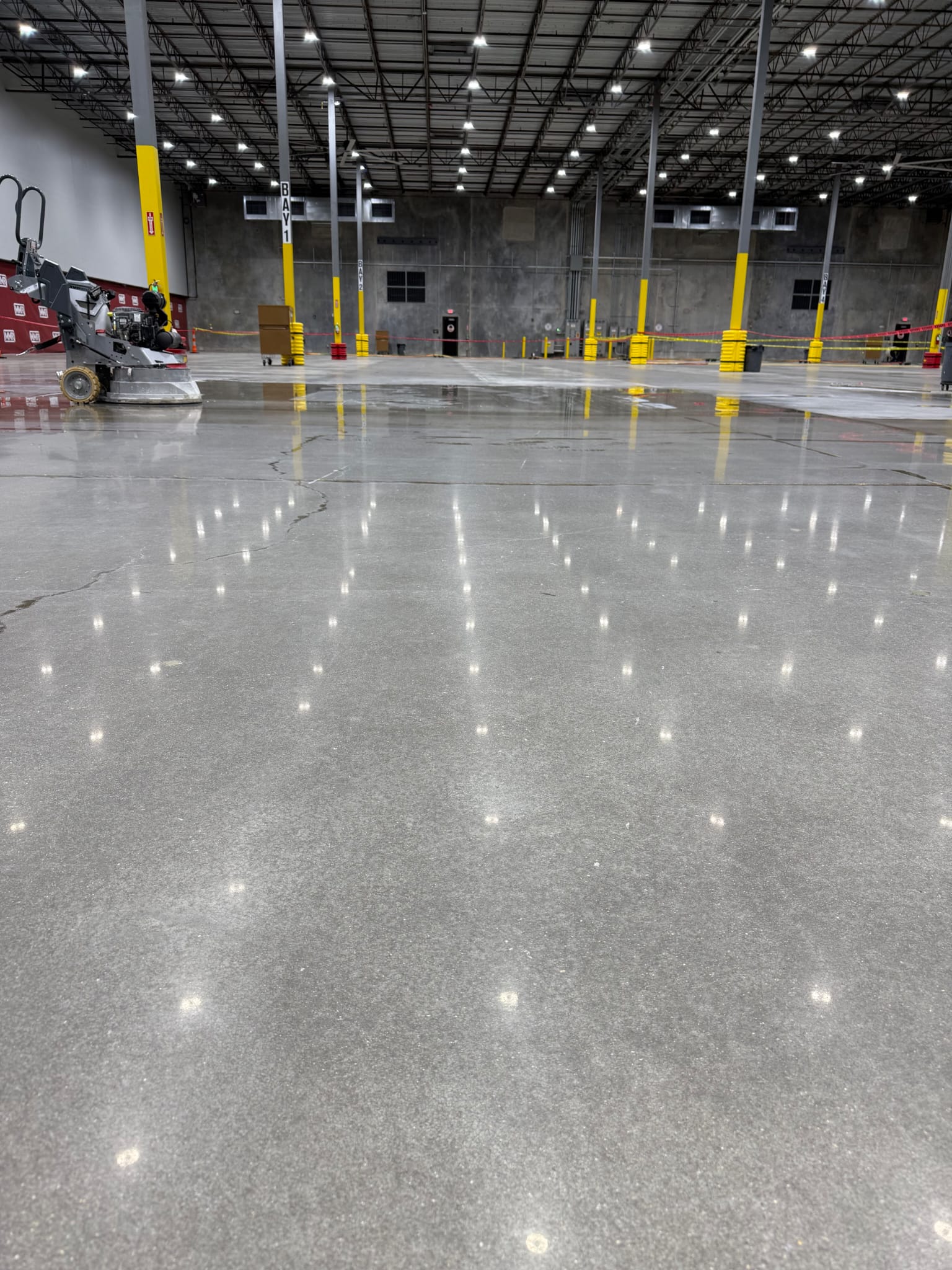
The New Orleans hospitality and retail market values interior aesthetics more than most. Polished concrete fits that market because it does not look like a construction material when finished correctly. At 1,500 to 3,000 grit, a polished slab has a mirror-like reflectivity that photographs well and holds its look under heavy cleaning schedules. We have completed large commercial polished concrete projects throughout Louisiana and bring that scale and skill to New Orleans projects.
Finish Levels and Aggregate Exposure
- Cream finish. The slab surface is polished to expose only the cream layer of paste. The result is a smooth, uniform surface with minimal aggregate showing. Consistent appearance across the floor.
- Salt-and-pepper. Light grinding exposes fine aggregate and some larger stones near the surface. The most common commercial finish. Natural variation in the concrete reads as texture.
- Full aggregate exposure. Deeper grinding cuts down to the coarse aggregate. More dramatic visual with visible stone. See our polished concrete page for the full specification breakdown.
The Polishing Process
We run a sequence of diamond tooling from coarse to fine, typically starting at 30 to 50 grit for concrete in fair condition and progressing through 100, 200, 400, 800, 1500, and 3000 grit. Densifier is applied at the coarse-to-medium transition to harden the surface and increase reflectivity. Crack and joint treatment happens early in the process. The finished floor is sealed with a guard product appropriate for the intended use. New Orleans slabs in older buildings sometimes have higher porosity or contamination history that requires additional prep cycles before the polishing sequence can begin. We assess the slab before scoping the project. For New Orleans pricing and scheduling, call (225) 456-9224 or visit our contact page. See work in our project gallery.
What Old New Orleans Concrete Throws at Us
A lot of the polished concrete work in this city happens in buildings that have been around a while, and old slabs come with history. Under the carpet or tile you pull up in a converted warehouse or a renovated storefront, you often find cutback adhesive, old mastic, layers of paint, or a slab that has been patched a dozen times over the decades. All of that has to come off before the polishing sequence can even start, and how a slab reacts to grinding is not something you can fully predict from the surface. We test-grind an area first to see the aggregate and the hardness, then set the plan around what the concrete actually is rather than assuming. That upfront honesty is why our floors come out consistent instead of blotchy.
Moisture behaves differently for polished concrete than it does for a coating, which is one of its advantages in a high-water-table city. Because we are refining the slab itself and not laying a film on top, there is no coating to lift when vapor pushes up from below. The floor cannot delaminate because there is nothing to delaminate. That makes polished concrete a smart pick for a New Orleans ground floor where slab moisture would put a coating at constant risk. We do still watch cure times on the densifier and guard products in humid stretches, because those chemistries need proper set time, and we schedule around the weather so they react the way they should.
For the hospitality and retail spaces that make up so much of this market, the finished polish is part of the room’s identity, and a mirror-gloss floor at high grit photographs beautifully under a bar or gallery’s lighting. But we are always straight with owners about the trade-off between the reflective look and everyday reality: a high-gloss floor shows dust and footprints faster than a satin finish, so in a very high-traffic entry we sometimes recommend a slightly lower sheen that keeps the premium look without demanding constant mopping. Matching the finish to how the space actually runs, not just how it looks empty on day one, is the part of this work that comes from having polished a lot of real floors.
Polished Concrete in New Orleans FAQ
Can old concrete in a New Orleans building be polished?
Often yes. Older slabs can be polished, though the process may require more prep if there is contamination, old adhesive from previous flooring, or surface damage. The condition and aggregate mix of the slab affect which finish levels are achievable. We assess before committing to a final specification. Call (225) 456-9224 to discuss your project.
Is polished concrete slippery in a New Orleans restaurant?
Dry polished concrete has a coefficient of friction comparable to most commercial flooring materials. Wet polished concrete can be slippery, which is why we apply a slip-resistant guard or specify an anti-slip treatment for any area with regular water or grease exposure. For kitchen areas or wet bars, a different coating system may be more appropriate. We advise based on the actual use case.
How does New Orleans humidity affect polished concrete?
Humidity does not degrade polished concrete the way it can degrade coating adhesion. The main consideration is cure schedule for any densifier or guard products applied during the polishing process. In high humidity periods, some products need extended set time. This is managed through scheduling and product selection.
How do you maintain polished concrete in a New Orleans commercial space?
Daily dry mopping or auto-scrubbing with a neutral cleaner. Avoid acidic cleaners that etch the guard coat. A maintenance re-application of guard product every one to three years keeps the finish at full reflectivity. Properly maintained polished concrete is one of the lowest-cost-per-year floor options in commercial use.
What does polished concrete cost in New Orleans?
Pricing depends on square footage, slab condition, and specified finish level. Larger footprints lower the cost per square foot. We provide a free, detailed price after reviewing the project. Call (225) 456-9224 or use our contact page.
Is polished concrete a good choice for a New Orleans ground floor with moisture?
It often is, and for a specific reason. Because polished concrete is the refined slab itself and not a coating laid on top, there is no film to lift when vapor pushes up from a high-water-table slab. A coating can delaminate under that pressure, but a polished floor cannot, because there is nothing to peel. That makes it a strong option for a New Orleans ground-floor space where slab moisture would keep a coating at risk. We still manage cure times on the densifier and guard in humid weather.
Can you polish the slab in an old converted warehouse or storefront?
Yes, and we do a lot of it. The catch is that old slabs come with old adhesive, mastic, paint, and patches that all have to come off before polishing can start, and the concrete under all of that reacts to grinding in ways you cannot fully predict from the surface. We test-grind an area first to see the aggregate and hardness, then build the plan around what the slab really is. That is why our polished floors in old buildings come out consistent instead of patchy.
Does a high-gloss polished floor show every footprint in a busy space?
A mirror-gloss floor at high grit is stunning and photographs beautifully, but it does show dust and prints faster than a lower sheen. In a very high-traffic New Orleans entry or bar, we will sometimes recommend a satin or semi-gloss finish that keeps the premium look without demanding constant mopping. We match the sheen to how the space actually runs day to day, not just how it looks empty at handoff, so you are happy with it a year in.
Polished Concrete in New Orleans
Cream, salt-and-pepper, and full-aggregate finishes. Permanent floors at commercial scale.
Call (225) 456-9224 Free Price