Old Paint on a Shenandoah Garage Floor Has to Come Off First
Key Points
- Paint from past owners is only as strong as its weakest layer
- Dusting concrete under that paint cannot hold a bond
- The grinder shows the cracks, stains and patches the paint was hiding
- The moisture reading still opens every quote on slabs of this era
Shenandoah is one of the big established neighborhoods east of Baton Rouge proper, and thousands of its homes went up from the 1970s onward off Jones Creek and Coursey. Walk into those garages and the story repeats. The concrete is dusting, there is paint on it from two owners ago, and that paint is flaking in patches where the tires turn. The tempting move is to scuff it and put something shiny on top. We never do that, and this post explains why, along with what usually turns up once the old layers are gone.
Every Coat of Old Paint Is a Weak Link
A floor coating is only as strong as the thing it is stuck to. Put a new system over old paint and the new system is stuck to the paint, and the paint is stuck to whatever the last person did before rolling it on. Nobody knows what that was. Maybe they washed the slab. Maybe they rolled straight over oil drips and a film of dust.
The flaking you already see tells you how that bond is holding up. Paint lets go where hot tires sit, where water tracks in, and where the slab below has gone soft. A new coating repairs none of it. It adds weight and tension on top of a failing layer, and when the old paint lifts, it takes the new floor with it in sheets. At that point the repair is the same grind we would have done at the start, except now there are two coatings to remove instead of one. Doing it once, first, saves you a second tear-out and a second week without your garage.
Dusting Concrete Means the Surface Is Spent
Sweep a bare patch of an older Shenandoah garage and you pick up a fine gray powder that is back a week later. That is the top skin of the concrete breaking down. Years of wear, water and tires loosen the cement paste at the surface until it rubs off under a broom.
Paint hides dusting for a while, which is part of why so many past owners reached for a can. The powder is still there under the film, though, and a coating bonded to loose dust is bonded to nothing. Diamond grinding takes that weak skin away along with the paint and opens up the harder concrete below. That open profile is what a primer can actually grip. Once the floor is coated, the dusting that prompted the call does not come back, because the surface that was shedding is gone and a sealed system sits in its place. If the shelves in your garage wear a layer of concrete dust, the slab is telling you where to start.
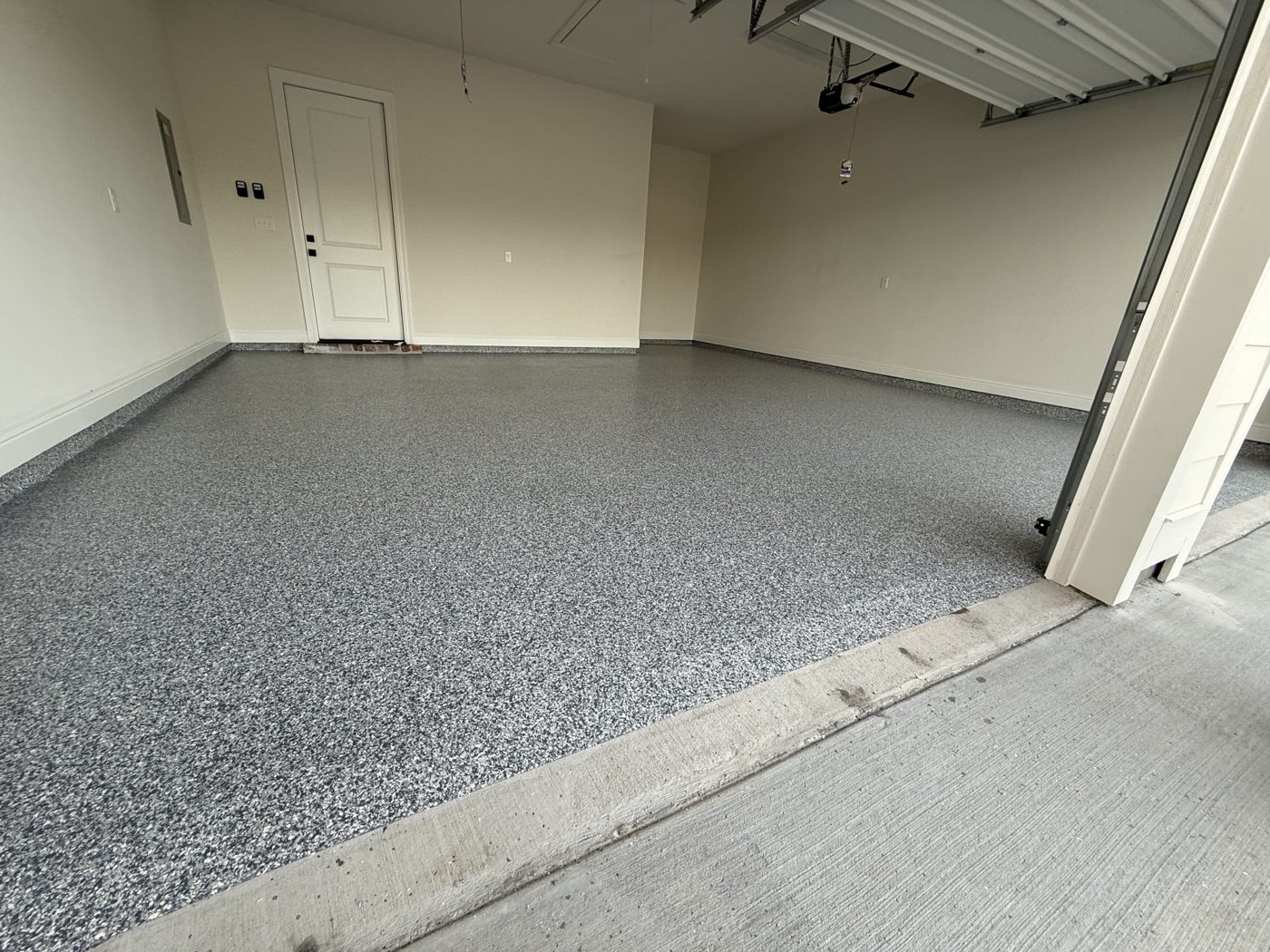
What the Grinder Turns Up
Old paint is good at keeping secrets. Once the grinder takes it off, the slab shows its real history, and we walk it with you before any color goes down.
Cracks are the usual find. Hairlines get chased open and filled with rigid epoxy, and under a finished system they disappear completely. Wider cracks get the same fill, but if the slab keeps moving they may ghost faintly over the years, and we tell you which kind you have instead of letting you find out later. Stains show up too. Oil that soaked in before the paint went on can sit deeper than the paint ever did, and it needs attention during prep so the primer bonds cleanly around it.
Sometimes a previous owner patched a low spot or filled a crack with something soft. Those get cut out and redone properly. Nothing here is a surprise on a slab poured in the 1970s or 1980s. It is simply the part of the job that was always there, hiding under a coat of gray.
The Moisture Reading Still Comes First
Grinding fixes the surface. It does nothing about water coming up from below, and slabs from this era usually pre-date vapor barriers. Those old slabs tend to read wet, which catches people who assume only houses near the water have that problem.
So the test opens every quote here, painted slab or bare. We take the reading during the walk. When the number calls for a vapor-tolerant primer, that is what the system is built on. The written warranty then names the system, the primer and the moisture reading, so the paper matches the slab it covers.
Old paint can muddy the picture. A painted slab traps moisture under the film, and some of the peeling that owners blame on cheap paint is vapor pushing from underneath. Taking the paint off and reading bare concrete is the honest way to know which problem you have. More on our work in the neighborhood is on the Shenandoah service area page.
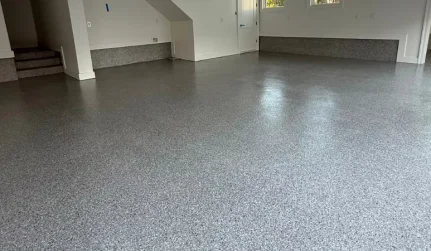
How the Garage Gets Handed Back
Grind day is the loud one. We contain the dust with shrouded grinders and vacuums, protect the walls and the water heater, and plan on two to three days of driveway parking for the whole install. Each evening the garage is left swept. With a polyaspartic topcoat, tires go back on the floor at 48 hours.
For a daily-parked two-car garage the choice often lands on a flake system, because the chip pattern hides crack repairs and the dust a working garage collects. A solid color or a metallic works too if you want a cleaner look and do not mind seeing more of what gets tracked in. Our Shenandoah garage coatings page lays out the full scope, and the flake epoxy page covers blends and chip size.
Afterward the upkeep is short: sweep it, mop it now and then, and wipe up oil when it drips. It wipes up whole. Finished floors are in our project gallery, or call (225) 456-9224.
Questions About Painted Garage Floors
Can you coat over paint that still looks mostly intact?
No. Paint that looks sound today is still bonded to whatever sat under it years ago, and nobody can test that from above. We grind every painted slab down to clean concrete so the new system bonds to the floor itself. It is the step that keeps a coating from peeling the way the paint did.
Why does my bare concrete keep making dust?
The top layer of the slab is breaking down from age, water and traffic, and loose cement paste rubs off under a broom. Grinding removes that weak skin and exposes harder concrete underneath. Once a sealed system goes down over it, the dusting stops, because the surface that was shedding is no longer there.
Will the cracks under the old paint show through?
Hairline cracks are filled with rigid epoxy during prep and disappear under the finished floor. Wider cracks get the same fill, but if the slab keeps moving they may ghost faintly over the years. We point out which kind you have on the walk, once the paint is off and the concrete is visible.
Paint Peeling in Your Garage?
Connor or a senior installer walks the slab, takes the moisture reading, and puts the grind and repair work in writing before day one.
Call (225) 456-9224 Free Price