Turning a Shenandoah Garage Slab Into a Home Gym Floor
Key Points
- A gym floor gets a gritted, wear-rated system sized to how you train
- More grit means surer footing and a little more work with the mop
- Rubber mats still belong wherever heavy weight hits the ground
- Older slabs get a moisture reading before anything is chosen
Plenty of the garages and outbuildings we walk in Shenandoah are no longer only for cars. A rack goes up, a bench comes in, and a few rubber mats land on dusting concrete. That works for a while. Then sweat pools on bare slab, the mats creep, and concrete dust settles on every bar and plate. Home gyms here get gritted, wear-rated systems sized to the use and the budget. This post covers what we think about when a room is going to be a place to train: grip, dropped weight, cleanup, and the slab underneath all of it.
A Gym Floor Is Judged by Footing
In a parking bay the floor mostly has to shrug off tires. In a gym it has to hold your feet still while you move weight. A smooth glossy coating feels fine in socks and turns sketchy the moment sweat drips or a wet shoe comes in off the driveway.
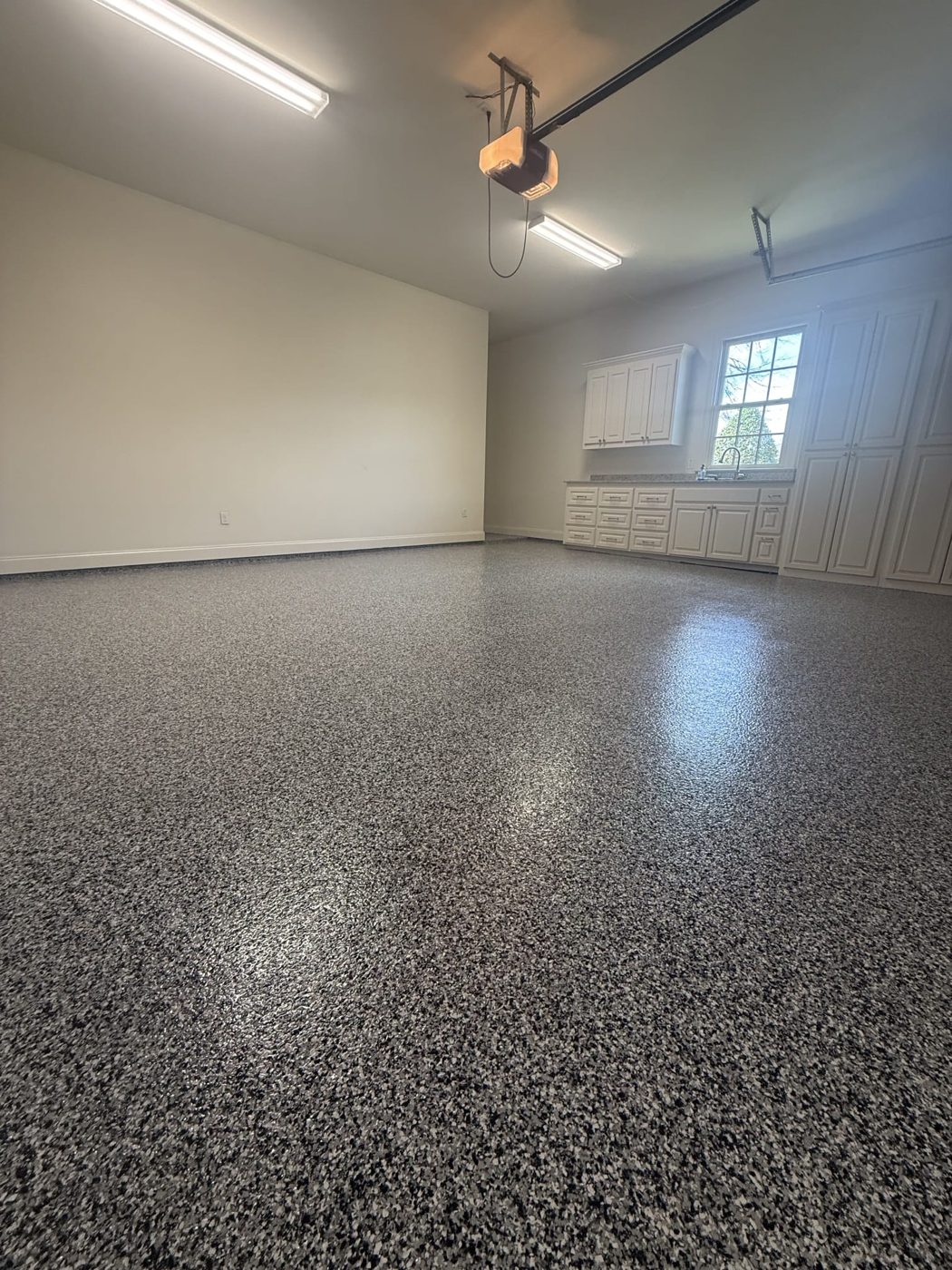
That is why training spaces get a gritted topcoat. Fine aggregate is broadcast into the finish so the surface carries texture you can feel under a sneaker. It sits over flake or a solid color, so you keep the look of the floor and still get the grip. The system underneath is chosen for wear, because a gym sees plates set down, benches dragged and bars racked day after day.
Sizing matters as much as texture. A corner with a treadmill and some dumbbells needs less than a full rack setup where someone deadlifts four mornings a week. We ask how you train on the walk, then build the floor to that. Our anti-slip coatings page goes deeper on the gritted systems themselves.
Choosing a Grit Level You Can Live With
Grit is a trade. More of it gives surer footing when the floor is wet. It also gives a mop more to catch on and holds a little more dust between cleanings. Less grit mops out almost like a smooth floor and still beats bare gloss for traction.
For most home gyms the sweet spot sits in the middle. You want enough bite that a sweaty lunge or a box jump landing stays put, without turning a quick cleanup into scrubbing. Where the gym shares a room with a parked car or a door to the yard, rain tracked in off the driveway counts too, and that entry zone may want a touch more texture than the rest.
The decision happens on samples, not a screen. Connor or a senior installer brings textured pieces to the walk so you can stand on them, press a palm across them, and picture a mop going over. Most people settle it in a few minutes once they feel the difference under their own shoes.
Dropped Iron and Where Mats Still Belong
No floor coating is built to take a loaded barbell dropped from overhead again and again. Resin systems are tough, and they handle plates set down, dumbbells rolling off a bench and the odd kettlebell bumping the floor. Repeated hard drops put a lot of force on a small spot, and over time that can chip any coating, just as it chips bare concrete.
So most home gyms get both. The coating covers the whole slab, wall to wall, sealed and easy to clean. Rubber mats or a lifting platform go where the heavy work lands: under the rack, at the deadlift spot, anywhere you drop weight on purpose. The rest of the room stays open coated floor for stretching, cardio machines and moving around.
Mats sit better on a coated slab, too. Sweat and grit do not get ground into raw concrete underneath them, and when you pull a mat up to clean, the floor below wipes out instead of shedding powder.
Sweat, Spills and the Weekly Mop
Bare concrete drinks whatever lands on it. Sweat, a spilled shaker bottle, a knocked-over jug of water: all of it soaks in, and a garage gym on raw slab picks up a smell no fan clears. A sealed floor keeps that on top, where a towel or a mop takes it away.
A damp mop after heavy sessions and a sweep once a week covers it. A plain cleaner in water does the job, and anything harsh enough to dull a topcoat stays on the shelf. Gritted floors like a mop with some body to it, since a flimsy sponge snags on texture. Wipe up lifting chalk before it gets tracked around, because chalk and sweat together make a slick paste on any surface.
The concrete dust that used to settle on equipment stops as well. Once the shedding surface is ground off and sealed, benches and bars stay cleaner between workouts.
Older Slabs, No Vapor Barrier, and the Reading
Thousands of homes in Shenandoah went up from the 1970s onward off Jones Creek and Coursey, and slabs from that era usually pre-date vapor barriers. On slabs that age, the moisture meter tends to read high. A gym raises the stakes, since mats and platforms can hold vapor against the floor.
So the test opens every quote, gym or garage. We take the reading on the walk, and when the number calls for a vapor-tolerant primer, the system is built on one. Then comes the usual prep: a diamond grind to clean concrete, rigid epoxy in the hairline cracks, and contained grinding with shrouded grinders and vacuums so the dust stays out of the house. Plan on two to three days with the room off limits.
Read more about our local work on the Shenandoah service area page, browse the project gallery, or look at the flake epoxy page if you want a chip blend under the grit. Or call (225) 456-9224.
Questions About Home Gym Floors
Can I drop weights on a coated floor?
Set-downs and the occasional bump are fine. Repeated hard drops of a loaded bar can chip any coating, the same way they chip concrete. We coat the whole slab and recommend rubber mats or a platform wherever heavy weight lands on purpose, which keeps the floor looking good for the long run.
How do I deal with lifting chalk on a coated floor?
Wipe it up before it spreads. Chalk mixed with sweat turns into a slick paste on any surface, coated or not. A dry sweep after the session and a damp mop over the lifting area handle it, and a mat under the chalk bowl keeps most of it off the floor.
Does a gym in an older house need the moisture test?
Yes. Slabs in Shenandoah homes of this era usually pre-date vapor barriers, and readings often come back higher than owners expect. Mats can hold vapor against the floor as well. The reading decides whether the system gets a vapor-tolerant primer, and it opens every quote we write.
Building a Gym in the Garage?
Connor or a senior installer walks the room, reads the slab, and brings grit samples you can stand on before anything gets written.
Call (225) 456-9224 Free Price