Kitchen Floors That Take the Hose in New Orleans Restaurants
Key Points
- Kitchens get slip-rated urethane cement built for health-code washdowns
- The dining room can take a decorative epoxy that suits the room
- The work is phased so the restaurant never fully closes
- Daily care is a mop and neutral cleaner, with no strip-and-wax cycle
New Orleans has restaurant kitchens in every neighborhood, and a lot of them are running on floors that were never meant for how hard a line gets used. We see quarry tile with grout that holds grease, sealed concrete worn through at the dish pit, and sheet flooring lifting at the drain. Owners usually call us when the floor becomes the thing an inspector writes up, or the thing a cook slips on.
Why the Line Gets Urethane Cement
Back of house is the hardest floor in any building we coat. It takes boiling water off a stockpot, fryer oil, sanitizer, cold air rolling out of the walk-in onto a hot line, and a hose-down at close. Standard epoxy makes a good floor in a lot of rooms and a poor one here, because hot water and fast temperature swings are exactly what it handles worst.
Urethane cement is built for that room. It is a heavier system that bonds deep into the slab and puts up with heat, sudden temperature changes and constant wet far better than a thin film. It also runs up the wall as a cove at the base, which removes the hard corner where floor meets wall, the spot where grime and water collect and where an inspector looks first. Drains get detailed so the coating turns down into them instead of stopping short with an exposed edge.
Kitchens that go through a health-code washdown every night need a floor that stays sealed at every edge and every penetration. That is the specification, and it is why we never put a decorative system behind the pass. The full scope for kitchens is on our New Orleans restaurant flooring page.
Slip Rating Gets Set Zone by Zone
A wet kitchen floor is a safety problem before it is a cleaning problem. The urethane cement we run in kitchens is slip-rated, and its texture is set by where each part of the room gets wet and greasy. The fry station and the dish area take more tooth. A dry storage room can run smoother, since it gets swept more often than mopped.
There is a trade in that choice, and we talk it through on the walk. More texture means better footing in rubber-soled kitchen shoes and a little more scrubbing to get the floor clean. Less texture mops faster and gives less grip on the night a pan of oil goes over. Most owners land on a heavier profile where the cooks stand and a lighter one along the path to the back door.
We bring samples so a chef or kitchen manager can stand on them in their own shoes and wet them down. The person who works that line every night usually has a firm opinion about footing, and it is the right one to listen to.
Out Front, Decorative Epoxy Does the Talking
The dining room is a different floor with a different job. It has to look like it belongs with the rest of the room, shrug off chairs scraping, and clean up fast between seatings. A decorative epoxy system fits here, and the options open up: a solid color, a flake blend, or a metallic finish for a room that wants the floor to be part of the look.
The two systems meet at the kitchen door, and that transition gets planned instead of left to chance. We set the line where the traffic changes, usually at the threshold or just past the pass, and finish the edge so a server moving fast with a full tray never feels a lip under a foot.
Bars and host stands are where front-of-house floors wear first, from stools and people standing in one spot for hours. Those areas can take extra topcoat build. The finished dining room needs nothing stronger than neutral cleaner, which suits a closing crew mopping at midnight that wants to go home. Front-of-house finishes are in our project gallery.

Phasing the Work So Service Keeps Running
Closing a restaurant for a floor means lost revenue and lost regulars, so we plan the job so the business never fully closes. What that looks like depends on the menu, the hours and the layout. A place that goes dark one day a week gives us a natural window. A kitchen with two lines can cook on one while we work the other. Dining rooms often get done in sections after close, with part of the room roped off for the next service.
The walk settles the sequence before anybody writes a number, because phasing is a real part of the work. It shows up in the quote as its own line item, next to access, slab history and moisture, so you can read what it covers. Cure windows are built into that plan so nobody sets a prep table down on a floor that is not ready to hold it.
Restaurants in the Quarter and the CBD add tight access and neighbors to the plan, and those get handled up front as well.
Minutes With a Mop, and No More Stripping
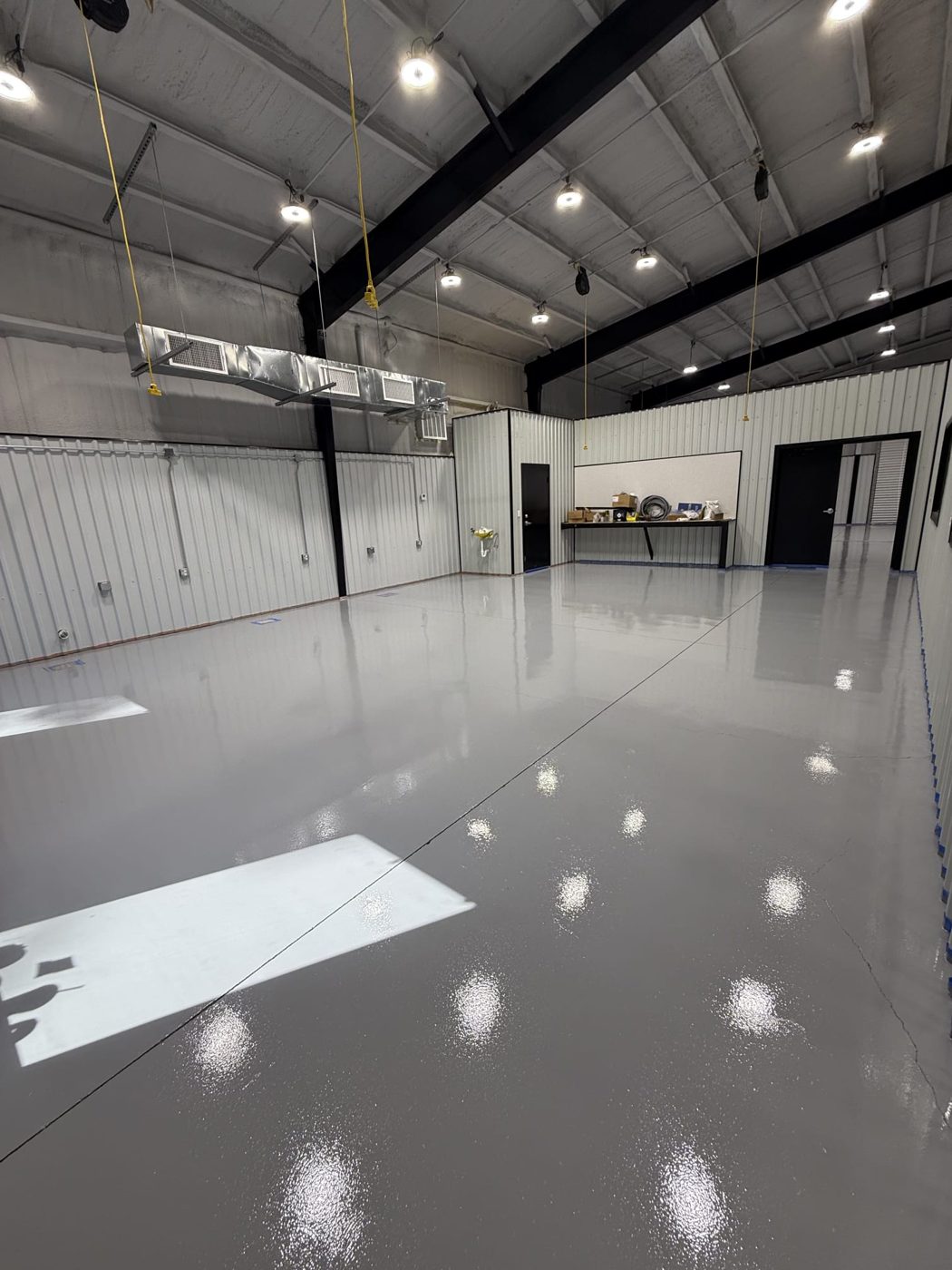
Plenty of commercial kitchens still carry floors that need stripping and rewaxing on a schedule, which means a crew, a closed room and a chemical smell hanging around before opening. A coated floor drops that cycle completely. Maintenance comes down to mopping with a neutral cleaner and rinsing the back-of-house sections, and then the floor is done.
A lot of that comes from having no seams. Grout lines hold grease no matter how hard the night crew scrubs, and a lifting sheet floor lets water sit underneath it. A coved, continuous surface gives dirt nowhere to settle, so what the mop picks up is what was actually there.
For an owner, that is labor cost coming off the books every month. Save the harsh degreasers for the hood and the fryer, and ask us which floor cleaners fit the system you chose.
If your floor is getting written up or has worn through at the dish pit, send your hours and layout through our contact page or call (225) 456-9224, and we will set a walk-through around your service.
What Kitchen Owners Ask Us
Can you coat a kitchen floor without closing the restaurant?
In most cases, yes. We phase the work around your slowest days and after close, and a kitchen with more than one line can keep cooking on one side while we work the other. The sequence gets agreed at the walk-through, before anything goes on the calendar.
Why not use the same epoxy in the kitchen as in the dining room?
Hot water, grease and nightly washdowns are hard on standard epoxy. Urethane cement handles that heat and constant wet much better, so it goes behind the pass. The dining room never sees those conditions, which leaves it free to take a decorative epoxy finish.
How does my staff clean the new floor?
Mop with a neutral cleaner and rinse the back-of-house areas. There is no stripping or waxing to schedule, ever. If you are unsure whether a product is safe for the coating, call (225) 456-9224 and ask before your crew uses it.
Get the Floor Off the Inspector’s List
We walk the kitchen and the dining room, set slip ratings with your staff, and write a phasing plan that keeps you serving.
Call (225) 456-9224 Free Price