What an Old New Orleans Garage Slab Is Hiding Under the Dust
Key Points
- The first job on an older slab is finding what previous owners already put on it
- A small grind sample panel exposes sealers, paint and patch layers before a system is chosen
- Cracks get read for movement, because a working crack shows through any film
- Flake under a polyaspartic topcoat gets a busy household parked inside again quickly
Most garage floors we coat in New Orleans belong to houses that have been lived in for a long time. The slab-on-grade ranches in Gentilly and New Orleans East have usually seen a few owners, and each one tended to leave something behind on the concrete. Garden District homes can carry even more history than that. None of it shows up in the photo you text us. It shows up when a grinder touches the floor.
Three Owners, Three Coats of Something
A garage floor in an older house is a record of every weekend project anyone ever did on it. We find clear sealers rolled on to keep the dust down, gray porch paint that went on after a move, a skim of patching compound over some ugly spot, and oil soaked well past the surface under the old parking space. Sometimes all four are there, stacked on top of each other.
A new coating grips clean, profiled concrete. It does not grip paint, and it has a poor relationship with old sealer, which can look like bare slab to the eye while still sitting there as a slick film. Roll a fresh coat over that and the new floor is only as attached as the weakest layer underneath. When a garage floor comes up in sheets a year after it went down, a buried layer like that is usually the reason.
So the walk at an older house is partly detective work. Connor or a senior installer watches how water beads on the floor, where the color shifts, where the surface feels waxy under a thumb, and where a section of concrete looks younger than the slab around it. Those notes decide where the grinder goes first.
The Sample Panel Is Where the Surprises Surface
Before recommending anything for an older slab, we grind a small sample panel, usually somewhere that will tell us the most, like the edge of the old parking spot or across a patched area. It costs you nothing at the walk stage.
What turns up changes from one house to the next. A sealer that looked long gone can gum up the diamonds. A patch can turn out soft enough to crumble under the grinder, which means it comes out and gets rebuilt before anything goes over it.
The value of finding these things on a small square is that changing course still costs nothing. Nobody has bought material, nobody has blocked out the week, and the scope you receive in writing describes the concrete as it really is.
Reading a Crack Before Covering It
Almost every older garage slab has cracks. What matters is which ones have finished moving. A hairline that wanders across the floor and has sat still for years is ordinary shrinkage, and we chase it open, clean it out and fill it so it disappears under the new floor.
A crack with one side sitting higher than the other is a different story. That lip says the two pieces of slab are still shifting against each other, and no coating bridges that for long. It will come back up through the finish as a line. We point those out on the walk and talk through the options plainly, including leaving a joint visible on purpose so the floor has somewhere to move.
The Water Under Every Slab Here
Much of this city sits at or below sea level, and the water table is effectively right under the concrete. A garage slab poured on grade pushes moisture up from underneath whether anyone can see it or not, and plenty of peeled floors around the French Quarter and the Marigny trace back to coatings that went down without a test.
So every New Orleans garage gets a moisture reading, taken during the same visit as the sample panel. Vapor-mitigating primers are the rule here rather than an upgrade, and the reading decides which one goes down. If the number comes back high, you hear about it at the walk instead of after the floor starts to bubble.
Getting the Garage Back Without Losing the Week
For most households the real deadline is the car. The garage is also the laundry room, the spare freezer, the bike rack and the path to the kitchen door. So the system talk usually comes down to how fast the floor can go back into service and how it holds up once it does.
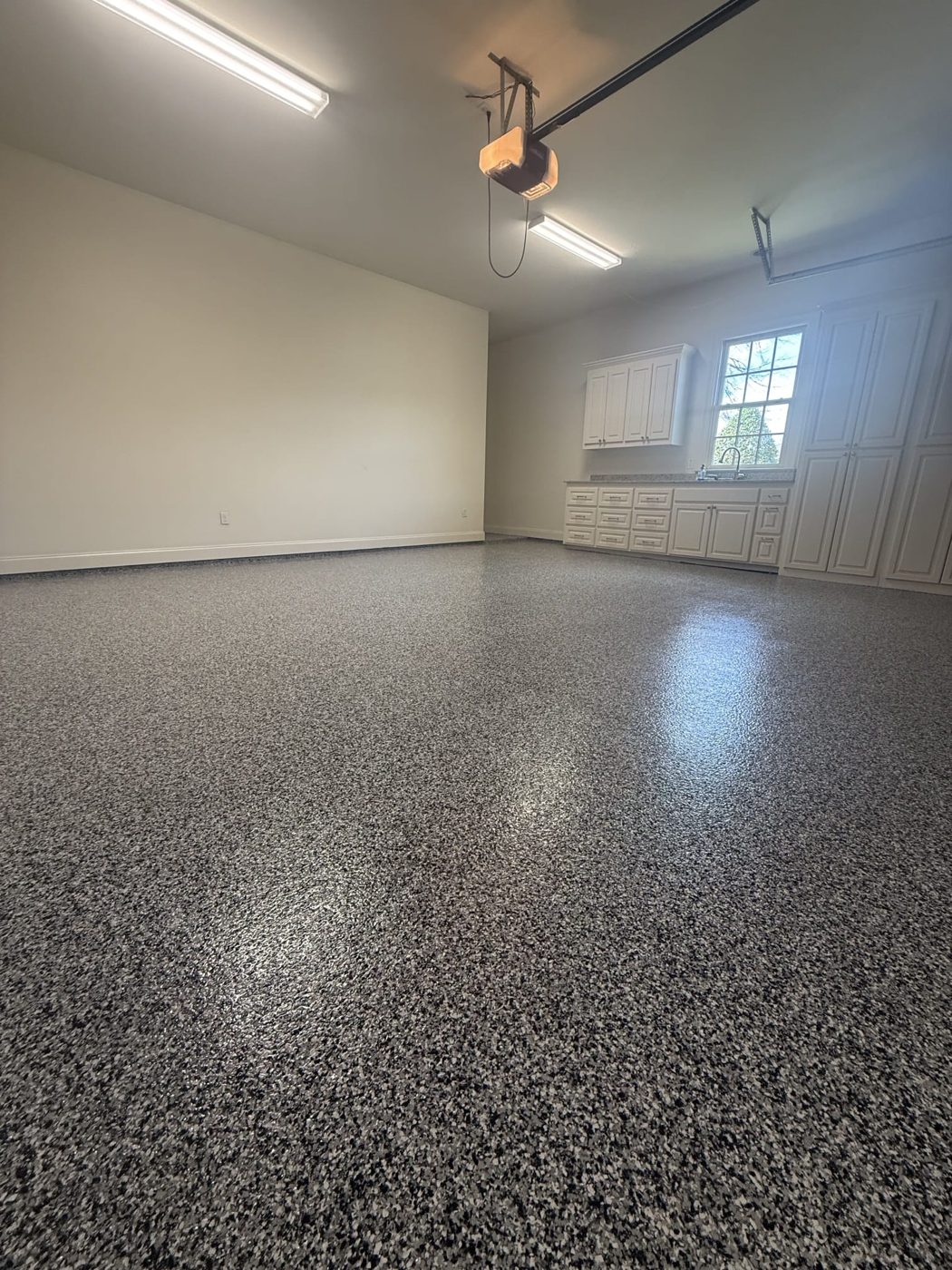
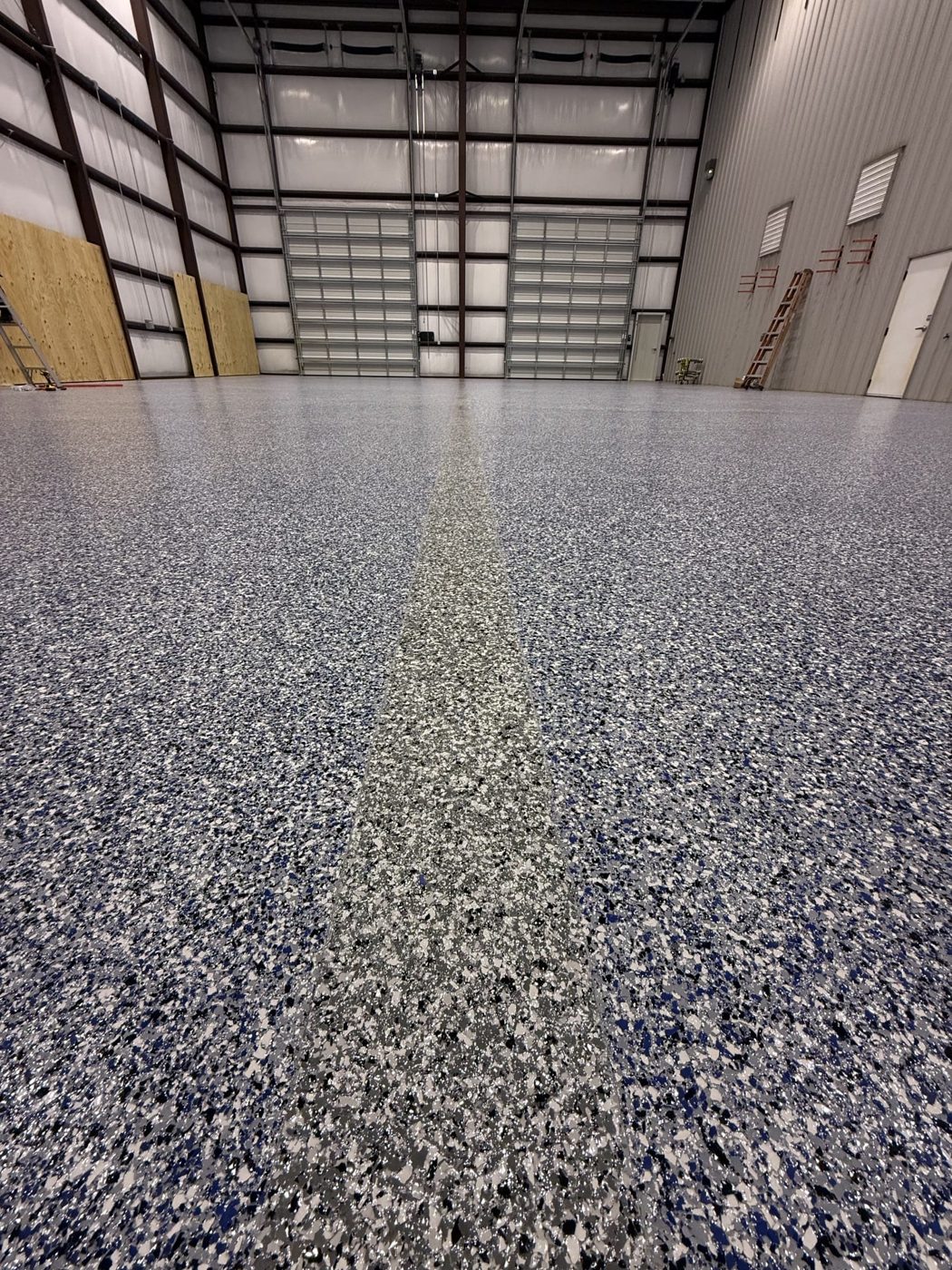
Flake is what most families end up choosing. Decorative chips get broadcast into the base coat in one of dozens of color blends, and the multi-tone surface hides tire marks and the grit that blows in every time the door opens. The chips also add a little texture underfoot, which helps on a floor that gets wet from rain dripping off a car.
Over the flake, a polyaspartic topcoat is the pick when speed matters. It is UV stable, so a garage that sits with its door open on Saturday afternoons does not yellow near the threshold, and on a slab that is prepped and ready it lets us finish the install in one day. When feet and then the car can come back gets written into your schedule, based on the product and that week’s weather. Clearing the garage the night before is the only homework. More on the system is on our New Orleans garage coatings page, and finished blends are in our project gallery.
If your garage has a few decades of history on it, send photos and your address through our contact page or call (225) 456-9224. Connor stays reachable by phone through the whole job, and the crew that walks your floor is the crew that coats it. You can also see what else we do across the city on our New Orleans service area page.
Questions From Owners of Older Garages
Can you coat right over the paint already on my garage floor?
No. Paint and old sealer come off completely, because the new coating needs to grip bare, profiled concrete. The grind sample panel at the walk shows how stubborn those layers are, and the removal is written into your scope so it never turns into a surprise.
What happens if the sample panel finds a bad patch?
A soft or crumbling patch gets cut out and rebuilt before any coating goes down. Because we find it on a small square during the walk, the repair is part of the written scope from the start and the price you agreed to stays where it is.
Will a flake floor get slick when the car drips rain on it?
The chips give the surface some texture on their own, and a fine aggregate can go into the topcoat for more grip where you walk from the car to the door. Call (225) 456-9224 and ask to feel the texture options before you pick a blend.
Find Out What Your Slab Is Hiding
A senior installer walks your garage, tests the concrete, grinds a sample panel and puts a written scope in your hands before anything gets coated.
Call (225) 456-9224 Free Price